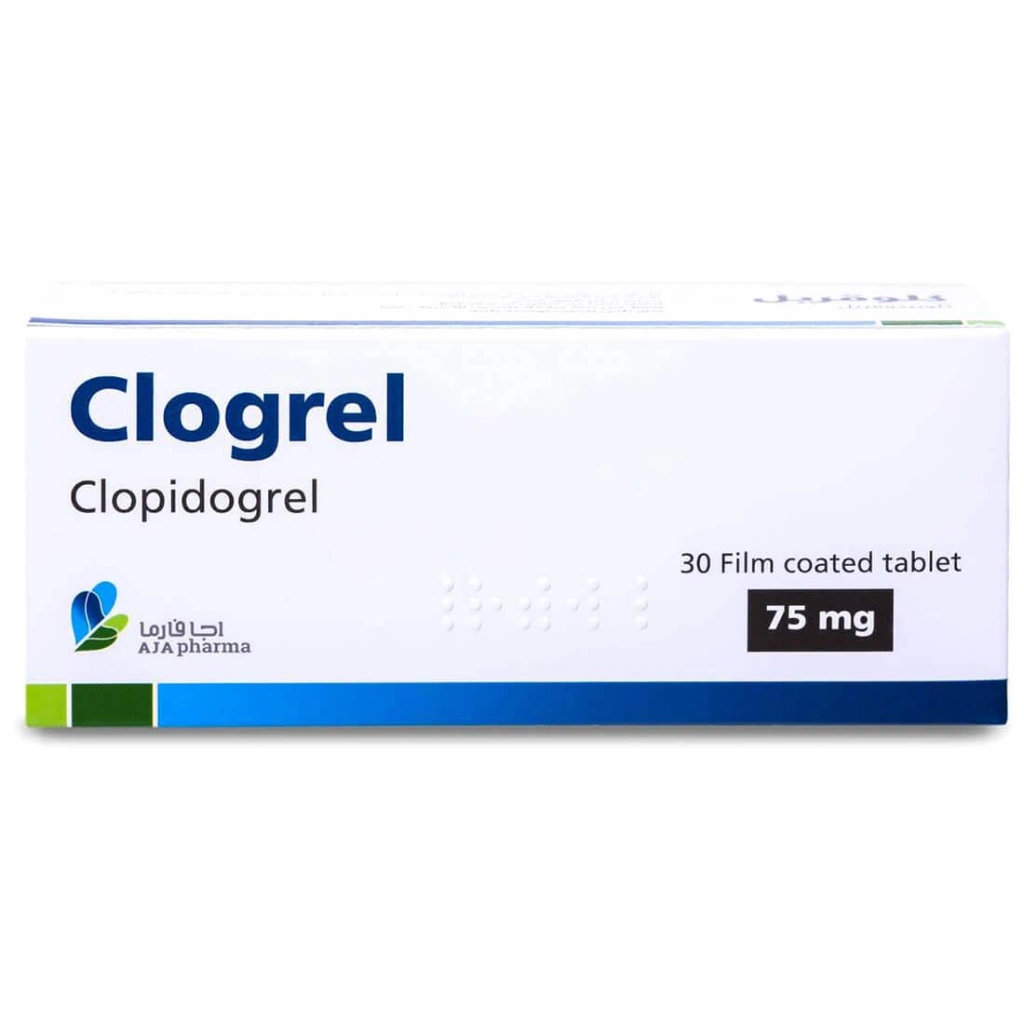
Clopidogrel 75 mg Tablets
Why Clopidogrel is used:
It is taken by adults to prevent blood clots (thrombi) from forming in hardened blood vessels (arteries), a process known as atherothrombosis, which can lead to atherothrombotic events (such as stroke, heart attack, or death).
Do not use Clopidogrel:
- If you are allergic to Clopidogrel or any of the other ingredients of this medicine.
- If you have a medical condition that is currently causing bleeding, such as a stomach ulcer or bleeding within the brain.
- If you suffer from severe liver disease.
Warnings and Precautions:
If any of the situations listed below apply to you, you should tell your doctor before taking Clopidogrel:
- If you have a risk of bleeding such as:
- A medical condition that puts you at risk of internal bleeding (such as a stomach ulcer).
- A blood disorder that makes you prone to internal bleeding (bleeding inside any tissues, organs, or joints of your body).
- A recent serious injury.
- Recent surgery (including dental).
- A planned surgery (including dental) in the next seven days.
- If you have had a clot in an artery of your brain (ischemic stroke) which occurred within the last seven days.
- If you have kidney or liver disease.
- If you have had an allergy or reaction to any medicine used to treat your disease.
Possible Side Effects:
Stop using the product and seek immediate medical attention if you experience throat tightness, swelling of the eyes, face, lips, or tongue, feel faint, or have difficulty breathing. Stop using the product if you develop hives or itching of the face or body.
Other Medicines and Clopidogrel:
You must specifically tell your doctor if you are taking medicines that may increase your risk of bleeding, such as:
- Oral anticoagulants (medicines used to reduce blood clotting).
- Non-steroidal anti-inflammatory drugs (NSAIDs), usually used to treat painful and/or inflammatory conditions of muscle or joints.
- Heparin or any other injectable medicine used to reduce blood clotting.
- Ticlopidine, another antiplatelet agent.
- Selective Serotonin Reuptake Inhibitors (including but not limited to fluoxetine or fluvoxamine), medicines usually used to treat depression.
- Omeprazole or esomeprazole, medicines to treat upset stomach.
- Fluconazole or voriconazole, medicines to treat fungal infections.
- Efavirenz or other antiretroviral medicines (used to treat HIV infection).
- Carbamazepine, a medicine to treat some forms of epilepsy.
- Moclobemide, a medicine to treat depression.
- Repaglinide, a medicine to treat diabetes.
- Paclitaxel, a medicine to treat cancer.
- Opioids.
How to use Clopidogrel:
Always take this medicine exactly as your doctor or pharmacist has told you. Check with your doctor or pharmacist if you are not sure.
The recommended dose, including for patients with a condition called "atrial fibrillation" (an irregular heartbeat), is one 75 mg tablet of Clopidogrel per day to be taken orally with or without food, and at the same time each day.
If you have experienced severe chest pain (unstable angina or heart attack), your doctor may give you 300 mg of Clopidogrel (one 300 mg tablet or four 75 mg tablets) once at the start of treatment. Then, the recommended dose is one 75 mg tablet of Clopidogrel per day as described above.
How to store Clopidogrel:
- Keep this medicine out of the sight and reach of children.
- Do not use this medicine after the expiry date which is stated on the carton and on the blister after EXP. The expiry date refers to the last day of that month.
- Refer to the storage conditions on the carton. If Clopidogrel is provided in PVC/PVDC/aluminum blisters, it should be stored below 30°C. If provided in all-aluminum blisters, it does not require any special storage conditions.
- Do not use this medicine if you notice any visible sign of deterioration.
- Do not throw away any medicines via wastewater or household waste.
Product Details:
Brand: Clogrel
Concentration: 75 mg
Quantity: 30 Tablets
Product Type: Tablets