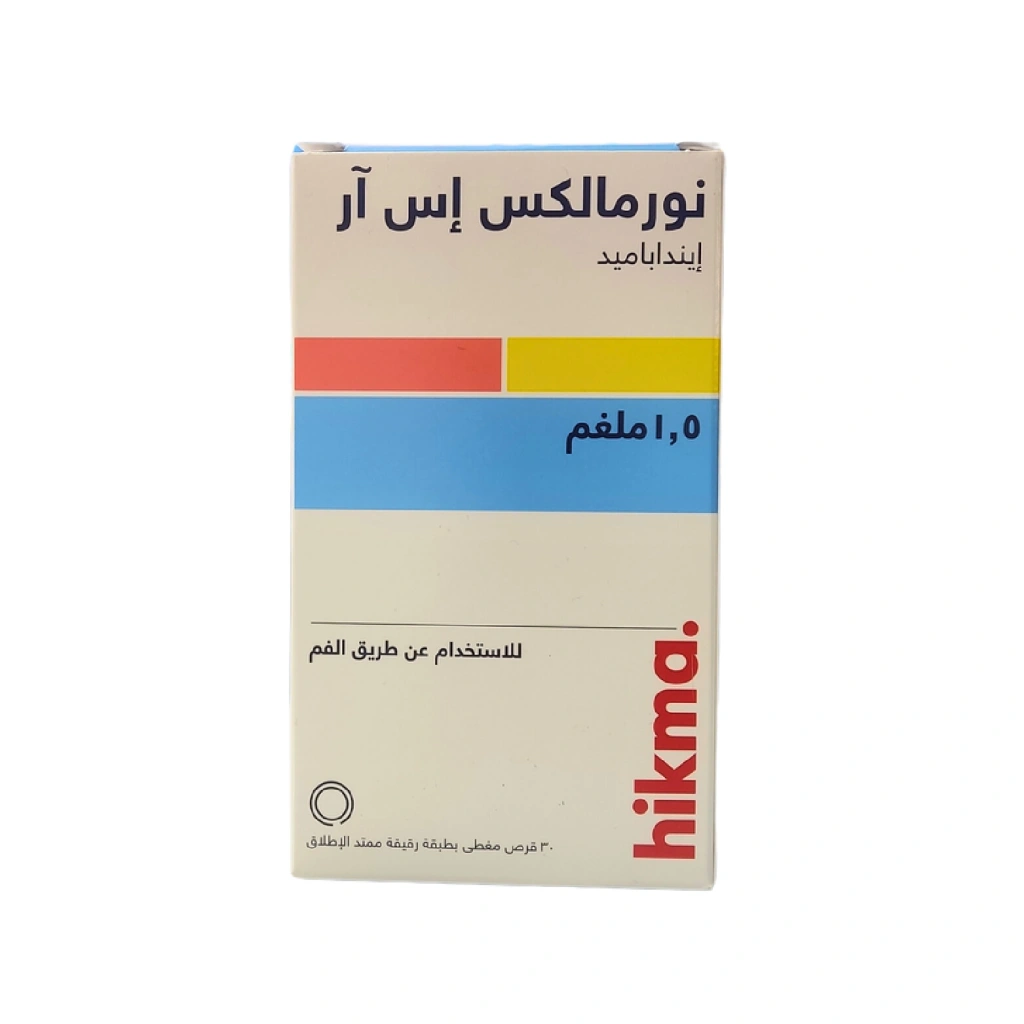
Indapamide 1.5 mg Sustained-Release Tablets*
What Indapamide is used for:
Indapamide can be used to treat high blood pressure (hypertension). It can be used alone or in combination with other blood pressure medications.
Most diuretics increase the amount of urine excreted by the kidneys. However, Indapamide differs from other diuretics as it causes only a slight increase in the amount of urine produced. Additionally, Indapamide dilates blood vessels so that blood passes through more easily, which helps lower blood pressure.
Do not take Indapamide:
- If you are allergic (hypersensitive) to Indapamide, any other sulfonamide, or any of the other ingredients of this medicine.
- If you have severe kidney disease.
- If you have severe liver disease or suffer from a condition called hepatic encephalopathy (liver problems affecting the brain and central nervous system).
- If you have low potassium levels in the blood (hypokalemia).
Warnings and Precautions:
Talk to your doctor or pharmacist before taking Indapamide:
- If you suffer from gout or diabetes.
- If you have kidney problems.
- If you have an overactive parathyroid gland (hyperparathyroidism).
- If you have heart rhythm problems.
- If you have liver problems.
- If you experience decreased vision or eye pain.
- If you have previously had an allergic reaction to penicillin or sulfonamides.
- If you are an athlete, as this may lead to a positive reaction in doping tests.
Possible Side Effects of Indapamide:
- Angioedema and/or urticaria (hives).
- Severe skin reactions.
- Irregular heartbeat.
- Severe stomach pain.
- Abnormal liver function.
- Fatigue, weakness, confusion, and stiff or poorly functioning muscles.
- Irritability and muscle tremors.
- Lumpy, itchy skin rash.
- More frequent infections or bruising more easily.
- Increased thirst, hunger, and weight loss.
- Photosensitivity reactions.
- Low blood potassium.
- Low blood sodium.
- High blood sugar levels in diabetic patients.
- Increased calcium levels in the blood.
Other Medicines and Indapamide:
Please tell your doctor or pharmacist if you are taking, have recently taken, or might take any other medicines. This includes medicines obtained without a prescription, including herbal medicines. This is because Indapamide can affect the way some medicines work. Also, some medicines can affect the way Indapamide works, including medicines for:
- Depression
- Heart rhythm problems
- Heart disease
- Constipation
- Mental disorders
- Infections
- Parasitic infections
- Allergies
- Pain
- Fungal infections
- Asthma
- Rheumatoid diseases
- Gout
- Multiple sclerosis
- Immunosuppression
- High blood pressure
- Diabetes mellitus
How to take Indapamide:
Always take Indapamide exactly as your doctor or pharmacist has told you. Check with your doctor or pharmacist if you are unsure.
- Continue taking this medicine until your doctor tells you to stop. It may take several months before this medicine shows its full effect.
- Tablets can be taken with or without food.
- Swallow the tablets whole with water.
- The usual dose is one tablet once a day, in the morning.
How to store Indapamide:
- Keep out of the reach and sight of children.
- Do not use Indapamide after the expiry date stated on the carton. The expiry date refers to the last day of that month.
- Do not use Indapamide if you notice the tablets are crumbling, broken, or discolored.
- Indapamide tablets do not require any special storage conditions.
- Medicines should not be disposed of via wastewater or household waste. Ask your pharmacist how to dispose of medicines no longer required. These measures will help protect the environment.
* The dosage form and route of administration of Indapamide 1.5 mg should be determined according to the therapeutic indication and the severity of the disease for each individual patient.
Product Details:
Brand: Normalex
Quantity: 30 Tablets
Product Type: Tablets