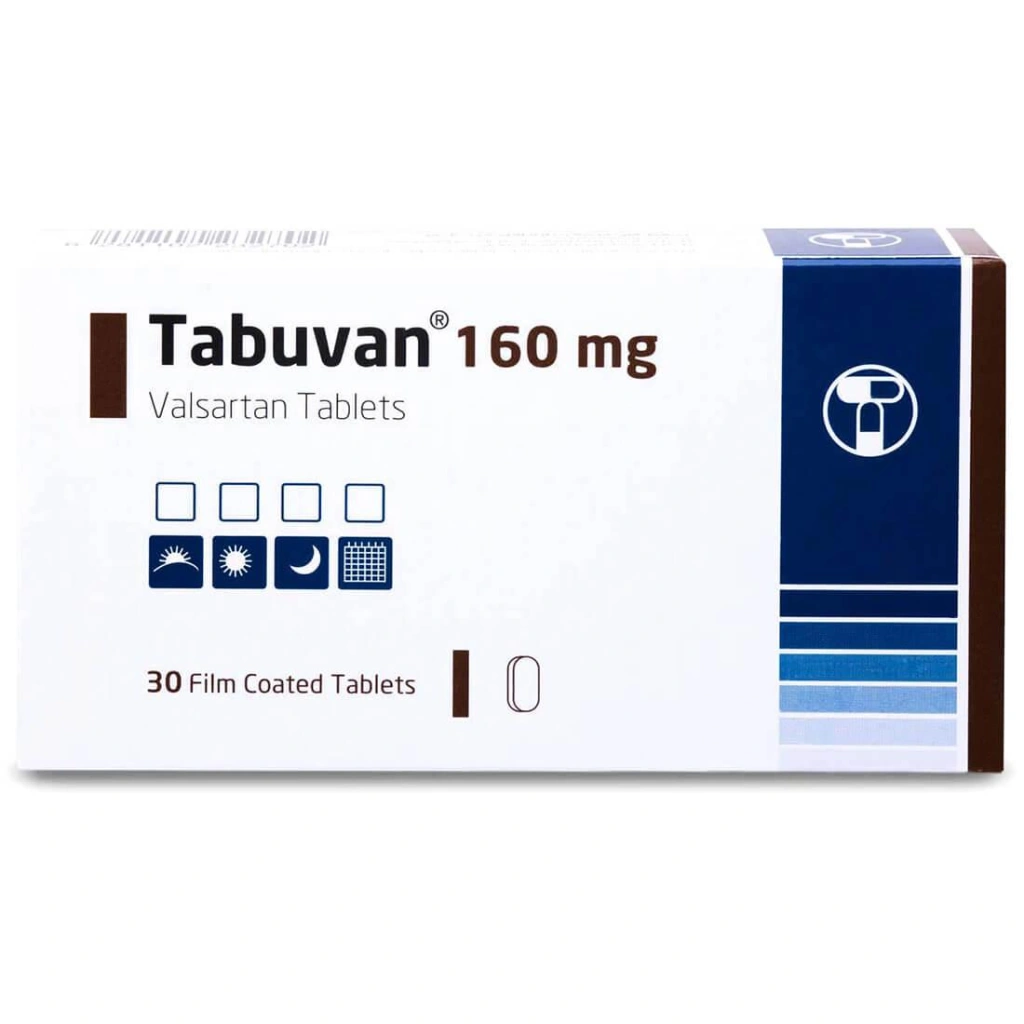
Product Description:
Please note that your doctor may have prescribed this medication for different uses and/or at a different dosage than what is stated in the package leaflet. Always follow your doctor's instructions.
The active ingredient is Valsartan, available in various concentrations:
Valsartan belongs to a group of medicines called angiotensin II receptor blockers (ARBs), which are used to treat high blood pressure.
Angiotensin II is a substance in the body that causes blood vessels to constrict, leading to an increase in blood pressure.
Valsartan works by blocking the effects of angiotensin II. The result is that blood vessels relax and blood pressure decreases.
Valsartan 40 mg film-coated tablets can be used for three different conditions:
Treatment of high blood pressure in children and adolescents aged 6 to 18 years.
High blood pressure increases the workload on the heart and arteries. If left untreated, it can damage blood vessels in the brain, heart, and kidneys, potentially leading to stroke, heart failure, or kidney failure. High blood pressure increases the risk of a heart attack.
When blood pressure is lowered to normal levels, the risk of developing these disorders decreases.
Treatment of adult patients who have recently suffered a heart attack (myocardial infarction). "Recent" here means between 12 hours and 10 days ago.
Treatment of symptomatic heart failure in adult patients.
Valsartan is used when the group of medicines called ACE inhibitors (medicines used to treat heart failure) cannot be used, or it can be used in addition to ACE inhibitors when other heart failure medications cannot be used.
Symptoms of heart failure include:
Shortness of breath and swelling of the feet and legs due to fluid accumulation.
It is caused by the heart muscle's inability to pump enough blood to meet the body's needs.
Valsartan 80 mg film-coated tablets can be used for three different conditions:
Treatment of high blood pressure in adults, children, and adolescents from age 6 to under 18 years.
High blood pressure increases the workload on the heart and arteries. If left untreated, it can damage blood vessels in the brain, heart, and kidneys, potentially leading to stroke, heart failure, or kidney failure.
High blood pressure increases the risk of a heart attack.
When blood pressure is lowered to normal levels, the risk of developing these disorders decreases.
Treatment of adult patients who have recently suffered a heart attack (myocardial infarction). "Recent" here means between 12 hours and 10 days ago.
Treatment of symptomatic heart failure in adult patients.
Valsartan is used when the group of medicines called ACE inhibitors cannot be used, or it can be used in addition to ACE inhibitors when other heart failure medications cannot be used.
Symptoms of heart failure include shortness of breath and swelling of the feet and legs due to fluid accumulation.
It is caused by the heart muscle's inability to pump enough blood to meet the body's needs.
Valsartan 160 mg film-coated tablets can be used for three different conditions:
Treatment of high blood pressure in adults, children, and adolescents from age 6 to under 18 years. High blood pressure increases the workload on the heart and arteries.
If left untreated, it can damage blood vessels in the brain, heart, and kidneys, potentially leading to stroke, heart failure, or kidney failure. High blood pressure increases the risk of a heart attack. When blood pressure is lowered to normal levels, the risk of developing these disorders decreases.
Treatment of adult patients who have recently suffered a heart attack (myocardial infarction). "Recent" here means between 12 hours and 10 days ago.
Treatment of symptomatic heart failure in adult patients.
Valsartan is used when the group of medicines called ACE inhibitors cannot be used, or it can be used in addition to ACE inhibitors when other heart failure medications cannot be used.
Symptoms of heart failure include shortness of breath and swelling of the feet and legs due to fluid accumulation.
It is caused by the heart muscle's inability to pump enough blood to meet the body's needs.
Valsartan 320 mg film-coated tablets can be used for:
Treatment of high blood pressure in adults, children, and adolescents from age 6 to under 18 years. High blood pressure increases the workload on the heart and arteries.
If left untreated, it can damage blood vessels in the brain, heart, and kidneys, potentially leading to stroke, heart failure, or kidney failure.
High blood pressure increases the risk of a heart attack.
When blood pressure is lowered to normal levels, the risk of developing these disorders decreases.
Instructions for Use:
Always use this medicine exactly as your doctor has told you to achieve the best results and reduce the risk of side effects. Contact a doctor or pharmacist if you are unsure.
People with high blood pressure often do not notice symptoms. Therefore, many feel healthy.
It is very important to keep appointments with your doctor even if you feel well.
Adult patients with high blood pressure:
The recommended dose is 80 mg daily.
In some cases, your doctor may prescribe higher doses (such as 160 mg or 320 mg).
It is also possible that Valsartan may be combined with another medicine (such as a diuretic).
Children and adolescents (6 to under 18 years) with high blood pressure:
In patients weighing less than 35 kg:
The recommended starting dose of Valsartan tablets is 40 mg once a day.
In patients weighing 35 kg or more:
The recommended starting dose of Valsartan tablets is 80 mg once a day.
In some cases, the doctor may prescribe higher doses (the dose can be increased to a maximum of 160 mg and 320 mg).
Valsartan oral solution is recommended for children unable to swallow tablets.
Adult patients after a recent myocardial infarction: After a heart attack, treatment usually starts as early as 12 hours later, typically with a low dose of 20 mg twice a day.
A 20 mg dose can be obtained by dividing a 40 mg tablet.
Your doctor will gradually increase this dose over several weeks to a maximum of 160 mg twice a day.
The final dose depends on what you can tolerate as an individual patient.
Valsartan can be given with other heart attack treatments, and your doctor will decide the appropriate treatment for you.
Adult patients with heart failure:
The usual starting dose is 40 mg twice a day.
Your doctor will gradually increase this dose over several weeks to a maximum of 160 mg twice a day.
The final dose depends on what you tolerate as an individual patient.
Valsartan can be given with other heart failure treatments, and your doctor will decide the appropriate treatment for you.
Valsartan can be taken with or without meals.
Valsartan should be swallowed with a glass of water.
Take Valsartan at approximately the same time every day.
If you take too much Valsartan:
Contact a doctor, hospital, or poison control center if you take too much medicine or if a child takes the medicine by accident.
For other questions about the medicine, contact your doctor or pharmacist.
If you feel very dizzy and/or feel like you are going to lose consciousness, contact your doctor immediately and lie down.
Contact a doctor, pharmacy, or hospital if you accidentally take a large number of tablets.
If you forget to take Valsartan:
If you forget to take a dose, take it as soon as you remember. However, if it is almost time for the next dose, skip the missed dose.
You should not take a double dose to make up for a missed dose.
If you stop treatment with Valsartan:
If you stop treatment with Valsartan, your condition may worsen.
Do not stop using the medicine unless your doctor tells you to do so.
Ask your doctor or pharmacist if you have any questions about using this medicine.
Warnings and Precautions:
Do not use Valsartan:
If you are allergic (hypersensitive) to Valsartan or any of the other ingredients of this medicine.
If you have severe liver disease.
If you are 3 months pregnant or more.
If you have diabetes or impaired kidney function and are being treated with a blood pressure-lowering medicine containing aliskiren.
If any of these apply to you, contact your doctor and do not take Valsartan.
Tell your doctor:
If you have liver disease.
If you have severe kidney disease or if you are undergoing dialysis.
If you have narrowing of the renal artery.
If you have recently had a kidney transplant (received a new kidney).
If you have a serious heart disease other than heart failure or heart attack.
If you have experienced swelling of the tongue and face caused by an allergic reaction called angioedema when using other medicines (including ACE inhibitors), tell your doctor.
If these symptoms appear while using Valsartan, stop using Valsartan immediately and do not use it again.
If you are using medicines that increase the amount of potassium in the blood.
This includes potassium supplements or salt substitutes containing potassium, potassium-sparing medicines, and heparin. It may be necessary to check the blood potassium level at regular intervals.
If you have aldosteronism. This is a disease in which the adrenal glands produce too much of the hormone aldosterone.
If this applies to you, the use of Valsartan is not recommended.
If you lose a lot of fluids (dehydration) due to diarrhea, vomiting, or high doses of diuretic tablets (water pills).
Ingredients:
The active ingredient is Valsartan.
Available in different concentrations and from multiple manufacturers:
Valsartan 40 mg coated tablets.
Valsartan 80 mg coated tablets.
Valsartan 160 mg coated tablets.
Valsartan 320 mg coated tablets.
Product Details:
Brand: Co-Tabuvan
Concentration: 160 mg
Quantity: 30 Tablets
Product Type: Tablets