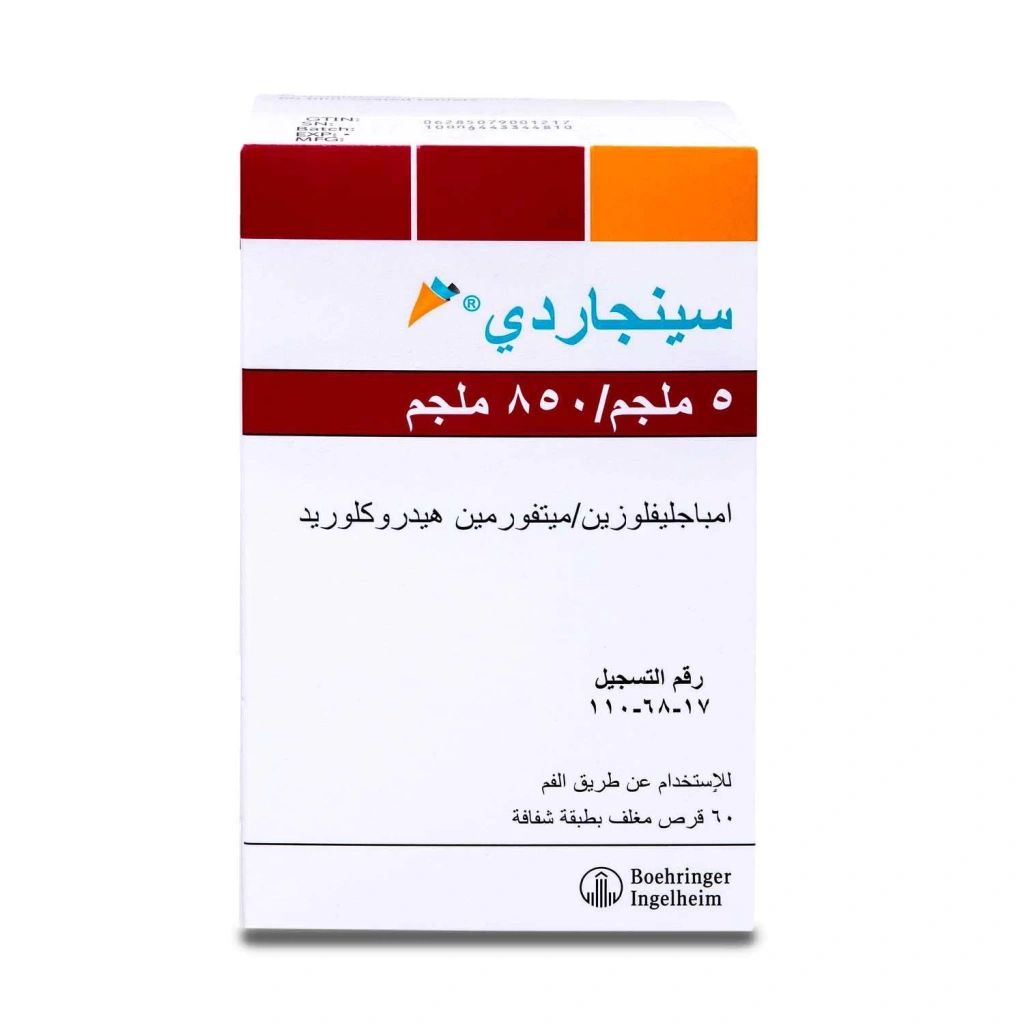
Empagliflozin, Metformin 850 mg / 5 mg Tablets
What is Empagliflozin/Metformin and what is it used for:
This medication contains two active substances: Empagliflozin and Metformin. Each belongs to a group of medicines called "oral anti-diabetic drugs." These are medications taken by mouth to treat type 2 diabetes.
What is Type 2 Diabetes?
Type 2 diabetes is a disease that stems from your genes and lifestyle. If you have type 2 diabetes, your pancreas does not produce enough insulin to control the glucose level in your blood, and your body cannot use its own insulin effectively. This leads to high blood glucose levels, which can result in medical problems such as heart disease, kidney disease, blindness, and poor circulation in your limbs.
How Empagliflozin/Metformin works:
• Empagliflozin belongs to a group of medicines called sodium-glucose co-transporter-2 (SGLT2) inhibitors. It works by blocking the SGLT2 protein in your kidneys. This causes blood sugar (glucose) to be removed in your urine.
• Metformin works in a different way to lower blood sugar levels, mainly by inhibiting glucose production in the liver.
• This medicine lowers the amount of sugar in your blood. It can also help prevent heart disease.
Why use Empagliflozin/Metformin:
• Empagliflozin/Metformin is added to diet and exercise to treat type 2 diabetes in adult patients (18 years and older) whose diabetes cannot be controlled by adding metformin alone or metformin with other diabetes medications.
• Empagliflozin/Metformin can also be combined with other diabetes medications. These may be oral medications or injections such as insulin.
• Additionally, this medicine can be used as a substitute for taking both empagliflozin and metformin as individual tablets. To avoid overdose, do not continue taking separate empagliflozin and metformin tablets if you are taking this medication.
• It is important to continue your diet and exercise plan as told by your doctor, pharmacist, or nurse.
What you need to know before using this medication:
Do not use this medication:
• If you are allergic to empagliflozin, metformin, or any of the other ingredients of this medicine.
• If you have uncontrolled diabetes, for example, severe hyperglycemia (very high blood glucose level), nausea, vomiting, diarrhea, rapid weight loss, lactic acidosis, or ketoacidosis. Ketoacidosis is a condition where substances called "ketone bodies" build up in the blood and can lead to a diabetic pre-coma. Symptoms include stomach pain, fast and deep breathing, sleepiness, or an unusual fruity smell on the breath.
• If you have a diabetic pre-coma.
• If you have severe kidney function impairment.
• If you have a severe infection, such as an infection affecting the lungs, bronchial tubes, or kidneys. Severe infections may lead to kidney problems, which can put you at risk of lactic acidosis.
• If you have lost a lot of water from your body (dehydration), for example, due to long-term or severe diarrhea, or if you have vomited several times in a row. Dehydration may lead to kidney problems, which can put you at risk of lactic acidosis.
• If you are being treated for acute heart failure or have recently had a heart attack, have serious circulatory problems (such as shock), or have breathing difficulties. This may lead to a lack of oxygen supply to tissues, which can put you at risk of lactic acidosis.
• If you have liver problems.
• If you drink large amounts of alcohol, either every day or only occasionally.
Warnings and Precautions:
Risk of Lactic Acidosis
Empagliflozin/Metformin may cause a very rare but very serious side effect called lactic acidosis, especially if your kidneys are not working properly. The risk of lactic acidosis also increases with uncontrolled diabetes, serious infections, prolonged fasting or alcohol consumption, dehydration, liver problems, and any medical conditions where a part of the body suffers from a lack of oxygen supply (such as acute severe heart disease).
• If any of the above apply to you, talk to your doctor for further instructions.
• Stop taking the medicine for a short period if you have a medical condition that may be associated with dehydration (significant loss of body fluids) such as severe vomiting, diarrhea, fever, exposure to heat, or if you drink less fluid than usual. Talk to your doctor for further instructions.
• Stop taking the medicine and contact a doctor or the nearest hospital immediately if you experience symptoms of lactic acidosis, as this condition may lead to a coma.
Symptoms of lactic acidosis include:
• Vomiting
• Stomach pain (abdominal pain)
• Muscle cramps
• A general feeling of discomfort with severe fatigue
• Difficulty breathing
• Decreased body temperature and heartbeat
Lactic acidosis is a medical emergency and must be treated in a hospital.
Children and Adolescents:
This medicine is not recommended for use in children and adolescents under 18 years of age, as it has not been studied in these patients.
Other medicines and Empagliflozin/Metformin:
• If you need an injection of an iodine-containing contrast medium into your bloodstream, for example, for an X-ray or scan, you must stop taking this medicine before or at the time of the injection. Your doctor will decide when you should stop and when to resume treatment with this medicine.
Tell your doctor if you are taking, have recently taken, or might take any other medicines. You may need more blood glucose tests and kidney function checks, or your doctor may need to adjust the dose of this medicine. It is especially important to mention the following:
• Medicines that increase urine production (diuretics), as this medicine may increase the risk of losing too much fluid. Your doctor may ask you to stop taking this medicine.
• Other medicines that lower blood sugar levels such as insulin or "sulfonylurea" drugs. Your doctor may want to lower the dose of these other medicines to prevent blood sugar levels from falling too low (hypoglycemia).
• Medicines that may change the amount of metformin in the blood, especially if you have impaired kidney function (such as verapamil, rifampicin, cimetidine, dolutegravir, ranolazine, trimethoprim, vandetanib, isavuconazole, crizotinib, olaparib).
• Bronchodilators (beta-2 agonists) used to treat asthma.
• Corticosteroids (given orally, by injection, or inhalation), used to treat inflammation in diseases like asthma and arthritis.
• Medicines used to treat pain and inflammation (NSAIDs and COX-2 inhibitors, such as ibuprofen and celecoxib).
• Certain medicines for high blood pressure (ACE inhibitors and angiotensin II receptor antagonists).
• Medicines containing alcohol (see section "This medicine with alcohol").
• Iodinated contrast agents (medicines used during X-ray imaging).
This medicine with alcohol:
Avoid excessive alcohol consumption while taking this medicine as it may increase the risk of lactic acidosis.
How to use Empagliflozin/Metformin:
Always take this medicine exactly as your doctor has told you. Check with your doctor or pharmacist if you are not sure.
How much to take:
• The dose of this medicine varies depending on your condition and the doses of diabetes medicines you are currently taking. Your doctor will adjust your dose as necessary and tell you exactly what strength of the medicine you should take.
• The recommended dose is one tablet twice a day. Your doctor will usually start this drug treatment by prescribing a tablet strength that provides the same dose of metformin you are already taking (850 mg or 1000 mg twice a day), and the lowest dose of empagliflozin (5 mg twice a day). If you are taking both medicines separately, your doctor will start treatment with tablets of this medicine that provide you with the same amount of both. If you have impaired kidney function, your doctor may prescribe a lower dose.
Taking this medicine:
• Swallow the tablet whole with water.
• Take the tablets with meals to reduce the chance of an upset stomach.
• Take the tablet twice daily by mouth.
Your doctor may prescribe this medicine along with another diabetes medication. Remember to take all medicines as directed by your doctor to achieve the best results for your health. Your doctor may need to adjust your doses to control your blood sugar.
Proper diet and exercise help your body use blood sugar better. It is important to stick to the diet and exercise program recommended by your doctor while taking this medicine.
Possible side effects:
Stop using the product and seek immediate medical care if you develop hives, rash, chest tightness, wheezing, or low blood pressure.
How to store Empagliflozin/Metformin:
• Keep this medicine out of the sight and reach of children.
• Do not use this medicine after the expiry date which is stated on the blister and the carton after "EXP". The expiry date refers to the last day of that month.
• This medicine does not require any special storage conditions.
• Do not use this medicine if you notice that the packaging is damaged or shows signs of tampering.
Product Details:
Brand: Synjardy
Concentration: 5/850 mg
Quantity: 60 Tablets
Product Type: Tablets