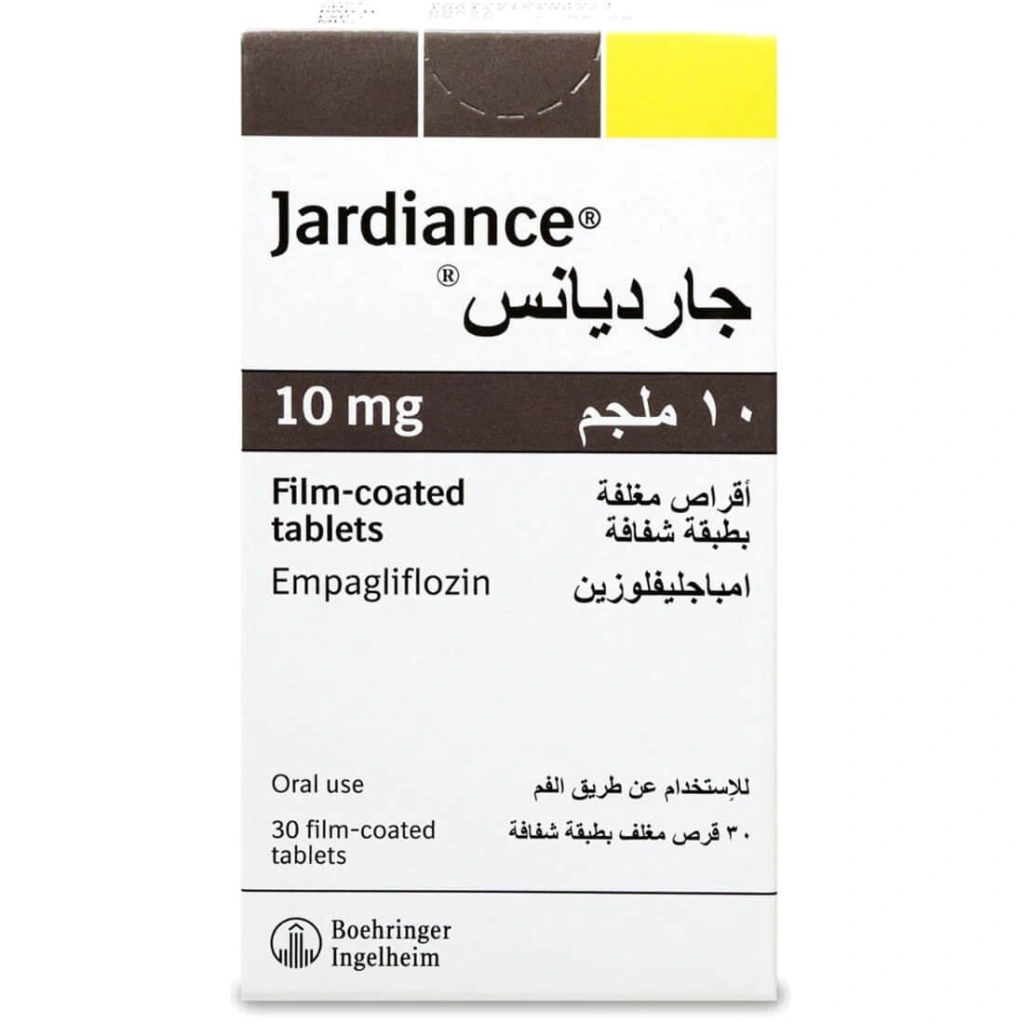
Empagliflozin 25 mg Tablets
What is Empagliflozin and what is it used for:
Empagliflozin is a member of a group of medicines called sodium-glucose co-transporter 2 (SGLT2) inhibitors.
Why Empagliflozin is used:
Empagliflozin is used to treat type 2 diabetes in adult patients (aged 18 years and older) whose blood sugar cannot be controlled by diet and exercise alone.
Empagliflozin can be used without other medicines in patients who cannot take metformin (another diabetes medicine).
Empagliflozin can also be used with other medicines to treat diabetes. These may be oral medicines or injectable medicines such as insulin.
It is important to continue with your diet and exercise plan as told by your doctor, pharmacist, or nurse.
How Empagliflozin works:
Empagliflozin works by blocking the SGLT2 protein in your kidneys. This causes blood sugar (glucose) to be removed in your urine. Consequently, Empagliflozin reduces the amount of sugar in your blood. This medicine can also help prevent heart disease.
What is Type 2 Diabetes?:
Type 2 diabetes is a disease that comes from your genes and lifestyle. If you have type 2 diabetes, your pancreas does not produce enough insulin to control the level of glucose in your blood, and your body is unable to use its own insulin effectively. This leads to high blood glucose levels, which can cause medical problems such as heart disease, kidney disease, blindness, and poor circulation in your limbs.
Do not use Empagliflozin:
- If you are allergic to Empagliflozin or any of the other ingredients of this medicine.
- If you are pregnant or breastfeeding.
Warnings and Precautions:
Talk to your doctor, pharmacist, or nurse before taking this medicine and during treatment:
- If you have type 1 diabetes. This type usually starts when you are young and your body does not produce any insulin.
- If you experience rapid weight loss, feeling sick or being sick, stomach pain, excessive thirst, fast and deep breathing, confusion, unusual sleepiness or tiredness, a sweet smell to your breath, a sweet or metallic taste in your mouth, or a different odor to your urine or sweat, contact a doctor or the nearest hospital immediately. These symptoms may be a sign of "diabetic ketoacidosis" – a rare but serious and sometimes life-threatening problem you can get with diabetes due to increased levels of "ketone bodies" in your urine or blood, which show up in tests. The risk of developing diabetic ketoacidosis may be increased with prolonged fasting, excessive alcohol consumption, dehydration, a sudden reduction in insulin dose, or an increased need for insulin due to major surgery or serious illness.
- If you have serious kidney or liver problems – your doctor may ask you to take a different medicine.
- You may be at risk of dehydration, for example:
- If you are sick, have diarrhea or fever, or if you are unable to eat or drink.
- If you are taking medicines that increase urine production [diuretics] or lower blood pressure.
- If you are over 75 years old.
- If you are 85 years of age or older, you should not start taking Empagliflozin.
- If you have a serious infection of the kidney or urinary tract with a high fever. Your doctor may ask you to stop taking Empagliflozin until you recover.
- Talk to your doctor immediately if you develop a combination of symptoms of pain, tenderness, redness, or swelling of the genitals or the area between the genitals and the anus accompanied by fever or feeling generally unwell. These symptoms may be a sign of a rare but serious or even life-threatening infection called necrotizing fasciitis of the perineum or Fournier's gangrene, which destroys the tissue under the skin. Fournier's gangrene must be treated immediately.
Children and Adolescents:
Empagliflozin is not recommended for children and adolescents under 18 years of age, as it has not been studied in these patients.
Other medicines and Empagliflozin:
Tell your doctor or pharmacist if you are taking, have recently taken, or might take any other medicines.
- If you are taking medicines that increase urine production (diuretics).
- If you are taking other medicines that lower the amount of sugar in your blood, such as insulin or a "sulfonylurea" medicine. Your doctor may want to lower the dose of these other medicines to prevent your blood sugar levels from getting too low (hypoglycemia).
Empagliflozin contains lactose (milk sugar). If your doctor has told you that you have an intolerance to some sugars, contact your doctor before taking this medicine.
Empagliflozin contains sodium:
This medicine contains less than 1 mmol sodium (23 mg) per tablet, which essentially means it is "sodium-free".
How to use Empagliflozin:
Always take this medicine exactly as your doctor has told you. Check with your doctor or pharmacist if you are not sure.
How much to take:
- The starting dose of Empagliflozin is one 10 mg tablet once a day. Your doctor will decide whether to increase your dose to 25 mg once a day.
- Your doctor may limit your dose to 10 mg once a day if you have a kidney problem.
- Your doctor will prescribe the strength that is right for you.
- Do not change your dose unless your doctor tells you to.
Taking this medicine:
- Swallow the tablet whole with water.
- You can take the tablet with or without food.
- You can take the tablet at any time of the day. However, try to take it at the same time each day. This will help you remember to take it.
- Your doctor may prescribe Empagliflozin along with another diabetes medicine. Remember to take all medicines as directed by your doctor to achieve the best results for your health.
- A proper diet and exercise help your body use blood sugar better. It is important to stick to the diet and exercise program recommended by your doctor while taking Empagliflozin.
Possible Side Effects:
Stop using the product and seek immediate medical attention if you develop hives, rash, chest tightness, wheezing, or low blood pressure.
How to store Empagliflozin:
- Keep this medicine out of the sight and reach of children.
- Do not use this medicine after the expiry date which is stated on the blister and the carton after "EXP". The expiry date refers to the last day of that month.
- This medicine does not require any special storage conditions.
- Do not use this medicine if you notice that the packaging is damaged or shows signs of tampering.
- Do not throw away any medicines via wastewater or household waste. Ask your pharmacist how to throw away medicines you no longer use. These measures will help protect the environment.
Product Details:
Concentration: 10 mg
Quantity: 30 Tablets
Product Type: Tablets
Brand: Jardiance