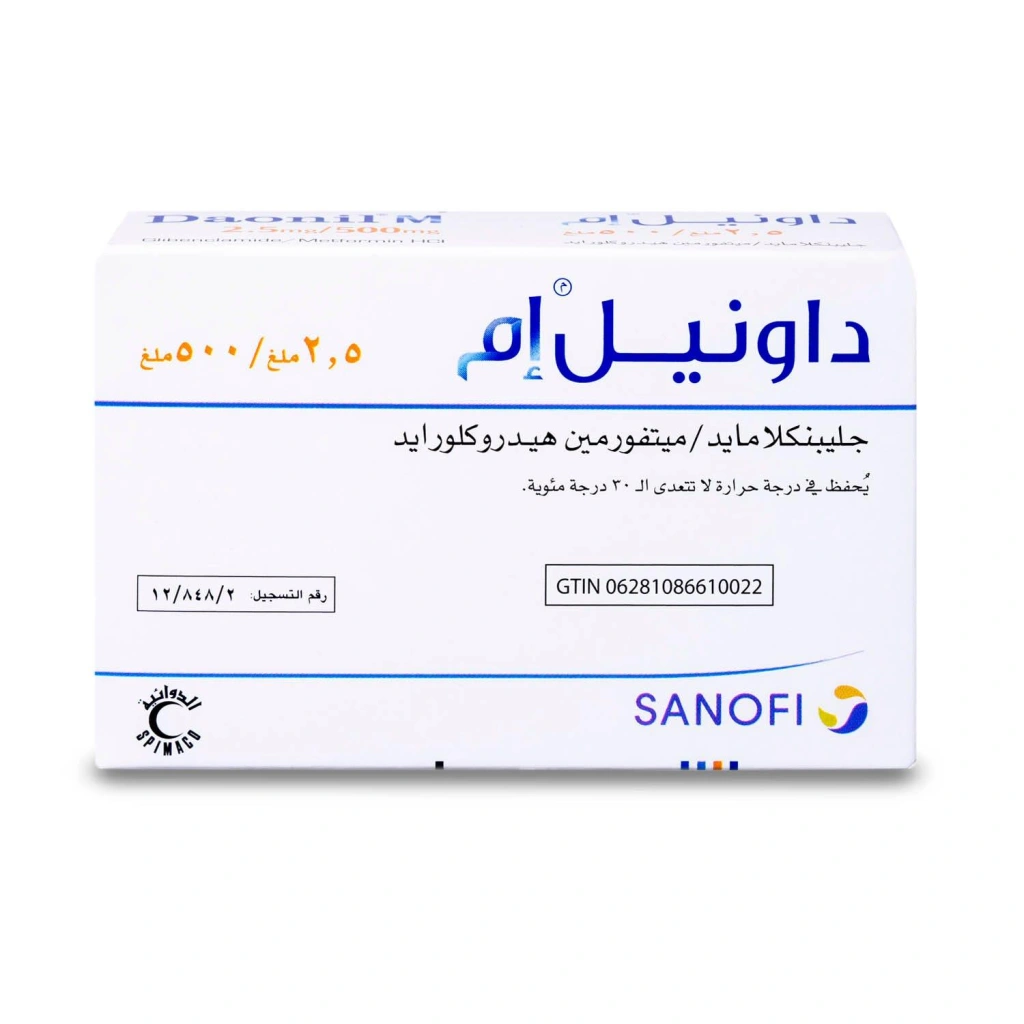
Glibenclamide / Metformin Hydrochloride 2.5 mg / 500 mg Tablets
Why Glibenclamide / Metformin Hydrochloride is used:
The combination of Glibenclamide / Metformin Hydrochloride is used to lower blood sugar levels in Type 2 diabetes (non-insulin-dependent) as an adjunct to proper diet and exercise.
Do not take Glibenclamide / Metformin Hydrochloride:
• If you are allergic to Glibenclamide, Metformin, other sulfonylureas, sulfonamides, or any of the other ingredients of this medicine.
• If you have Type 1 diabetes (insulin-dependent).
• If you have diabetic ketoacidosis (a serious complication where blood sugar levels are very high and you experience nausea, frequent urination, fatigue, and muscle weakness).
• If you have serious liver problems.
• If you have kidney problems.
• If you are dehydrated (lost a lot of water from your body due to long-term or severe diarrhea, or if you have vomited several times in a row).
• If you have a severe infection, such as an infection affecting the lungs or kidneys.
• If you have acute heart failure or recently had a heart attack, or have serious blood vessel problems or breathing difficulties.
• If you are taking a medicine called Bosentan for high blood pressure.
• If you consume a lot of alcohol.
Warnings and Precautions:
Tell your doctor about all your health conditions, including if:
• You are recovering from an injury, surgery, infection with fever, or other forms of stress.
• You have liver or kidney problems.
• You have a deficiency in an enzyme called Glucose-6-Phosphate Dehydrogenase (G6PD).
• You have heart disease.
• You must stop taking this medicine for a period of time before undergoing major surgery. Talk to your doctor.
• This medicine may cause a serious but rare complication called lactic acidosis, especially if you have impaired kidney function. Signs of lactic acidosis include abdominal pain, vomiting, muscle cramps, extreme fatigue, difficulty breathing, low body temperature, and heartbeat changes.
• This medicine may cause a drop in blood sugar levels, especially if you miss a meal, exercise too much, or drink alcohol. Signs of low blood sugar levels include: nausea, hunger, shaking, dizziness, confusion, drowsiness, difficulty speaking, and sweating. You can take a sugar cube or some juice.
Possible Side Effects:
Stop using this product and seek immediate medical attention if you develop a rash; itching; red, blistered, or peeling skin; tightness in the chest or throat; difficulty breathing, swallowing, or speaking; unusual hoarseness; or swelling of the mouth, face, lips, tongue, or throat. The frequency of these side effects is unknown.
Serious Side Effects:
• Allergic reactions
• Low blood sugar levels
• Liver problems
• Lactic acidosis
Other Medicines and Glibenclamide / Metformin Hydrochloride:
Tell your doctor about all the medicines you are taking. Glibenclamide / Metformin Hydrochloride interacts with many medicines including:
• Other medicines used for diabetes
• Certain high blood pressure medicines
• Birth control pills
• Medicines to treat mood disorders
• Certain antibiotics
• Non-steroidal anti-inflammatory drugs (NSAIDs)
• Corticosteroids
• Anticoagulants such as Warfarin
• Phenytoin
• Digoxin
• Certain medicines to lower blood cholesterol
• Certain medicines to treat asthma such as Salbutamol
• Dyes used in X-rays
How to take Glibenclamide / Metformin Hydrochloride:
• This drug is for adults only.
• Take this drug as directed by your doctor.
• Take this drug with food.
• The usual starting dose is Glibenclamide 1.25 - 2.5 mg / Metformin 500 - 1000 mg, given once or twice daily.
How to store Glibenclamide / Metformin Hydrochloride:
• Store at room temperature from 68 to 77 degrees Fahrenheit (20 to 25 degrees Celsius).
• Keep this medicine out of reach of children.
• Do not use this medicine after the expiry date stated on the box.
Product Details:
Brand: Daonil
Concentration: 2.5/500 mg
Quantity: 30 Tablets
Product Type: Tablets