Product Description
Product Name
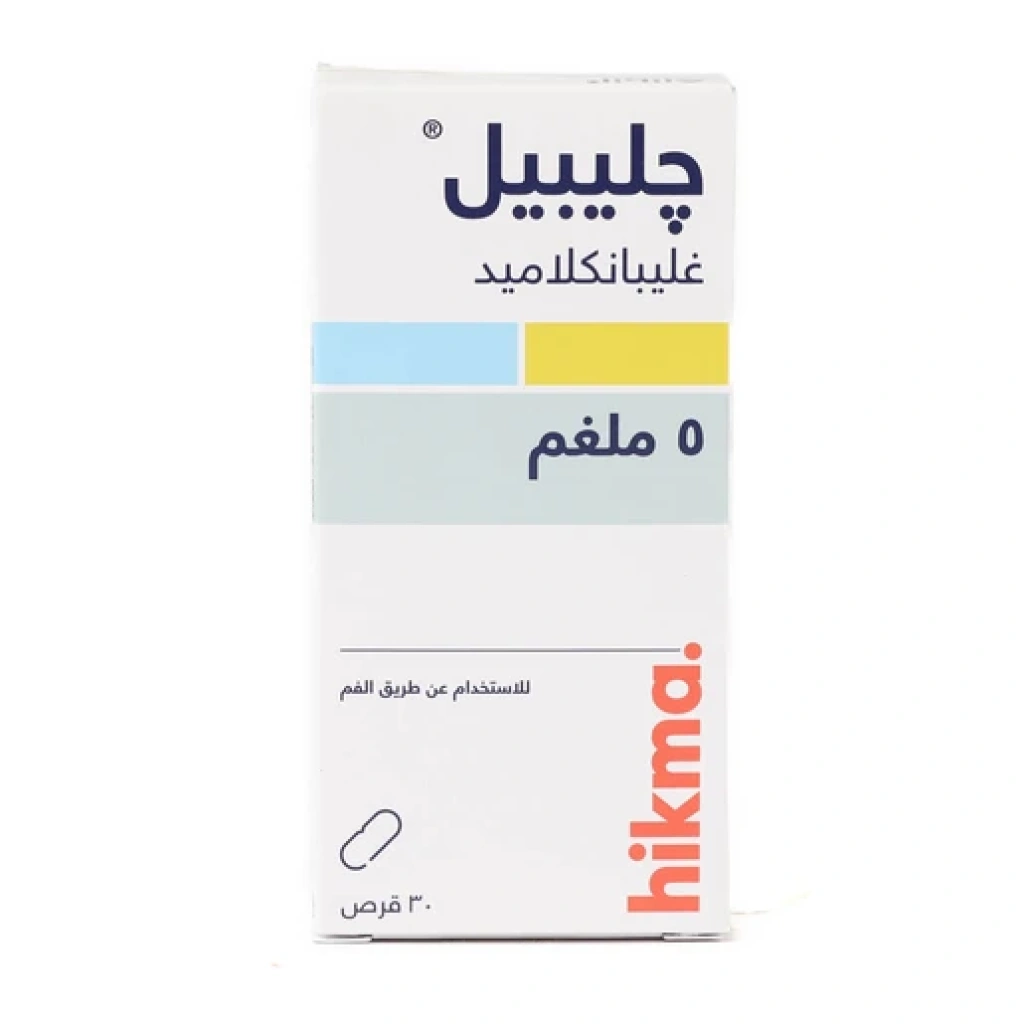
Glibil, Glibenclamide 5 mg - 30 Tablets
Scientific Name
Glibenclamide 5 mg Tablets
Glibil 5 mg Tablets belong to
Oral Antidiabetic Medications
Mechanism of Action of Glibenclamide
Like all sulfonylureas, Glibenclamide acts as an insulin secretagogue. It lowers blood sugar by stimulating insulin secretion from pancreatic beta cells and by inducing increased activity of intracellular insulin receptors.
Medical Uses of Glibil 5 mg Tablets
It is used to lower blood sugar levels in patients with type 2 diabetes (non-insulin-dependent) when diet and exercise alone fail to control the condition.
How to Use Glibil 5 mg Tablets
This medication is for adults only.
Take it exactly as directed by your doctor.
Take the medication with food, specifically with the first meal of the day.
It is important to follow the diet and exercise plan prescribed by your doctor while continuing the treatment.
The usual starting dose is 2.5 - 5 mg once daily.
Your doctor may gradually increase the dose up to 20 mg daily, taken as a single dose or two doses per day.
Dosages may change under special circumstances; always follow the instructions of your doctor or pharmacist.
If you take more than the prescribed dose, speak to a doctor or go to the hospital immediately.
If you miss a dose, take it as soon as you remember unless it is almost time for your next dose.
Do not take a double dose (two doses at the same time) to make up for a forgotten dose.
Side Effects of Glibil 5 mg Tablets
Although the following side effects are not common for everyone, some patients may complain of:
Decrease in blood cell counts (platelets, red and white blood cells)
Nausea
Diarrhea
Vision and eyesight problems
Allergic reactions
Low blood sugar levels (hypoglycemia)
Liver problems
Use of Glibil 5 mg Tablets During Pregnancy and Breastfeeding
If you are pregnant or breastfeeding, think you may be pregnant, or are planning to have a baby, ask your doctor or pharmacist for advice before taking this medicine.
Your doctor will discuss the potential risks and benefits of using this medication during pregnancy and breastfeeding.
Useful Tips for Diabetic Patients
All carbohydrates affect blood glucose levels, so it is important to know which foods contain carbs. Choose healthy carbohydrate sources and be aware of the required portion size.
Reduce salt intake. Too much salt can increase the risk of high blood pressure, which in turn increases the risk of heart disease and stroke. With diabetes, you are already at a higher risk for these conditions.
Eat more fruits and vegetables to get the vitamins, minerals, and fiber your body needs daily to stay healthy.
You can try low-calorie or zero-calorie sweeteners (artificial sweeteners) to help reduce sugar, such as Steviana, Sugar Match, or Tropicana Slim.
Stay active. Being more physically active helps you control your blood sugar levels.
Remember to monitor your blood glucose levels regularly using home devices such as Accu-Chek Instant.
Thiozac capsules and Neurobion tablets can help reduce nerve problems resulting from diabetes.
If you experience symptoms of hypoglycemia such as weakness, dizziness, increased sweating, rapid heartbeat, vision disturbances, or difficulty concentrating, consuming something containing sugar usually helps.
Warnings and Precautions while using Glibil 5 mg Tablets
Talk to your doctor about all your medical conditions before taking this medicine, including:
If you are recovering from an injury, surgery, or infection with fever.
If you have liver or kidney problems.
If you have a deficiency in the enzyme Glucose-6-Phosphate Dehydrogenase (G6PD).
If you have heart disease.
Tell your doctor or pharmacist if you are taking, have recently taken, or might take any other medicines, including over-the-counter drugs, prescriptions, herbal supplements, vitamins, and nutritional supplements.
Storage Conditions for Glibil 5 mg Tablets
Store below 25°C.
Do not refrigerate.
Keep this medicine out of the sight and reach of children.
Store in the original package to protect from moisture.
Do not use this medicine after the expiry date stated on the box/blister/label. The expiry date refers to the last day of that month.
Your Health in Numbers
Random Blood Sugar Test: A blood sample is taken at a random time. Regardless of when you last ate, a blood sugar level of 200 mg/dL or higher indicates diabetes. A level below 140 mg/dL is normal, and a reading between 140 and 199 mg/dL indicates prediabetes.
Fasting Blood Sugar Test: A blood sample is taken after an overnight fast. A fasting blood sugar level below 100 mg/dL is normal. A level from 100 to 125 mg/dL is considered prediabetes. If it is 126 mg/dL or higher on two separate tests, you may have diabetes.
Oral Glucose Tolerance Test: For this test, you fast overnight, and the fasting blood sugar level is measured. Then you drink a sugary liquid, and blood sugar levels are tested periodically over the next two hours.