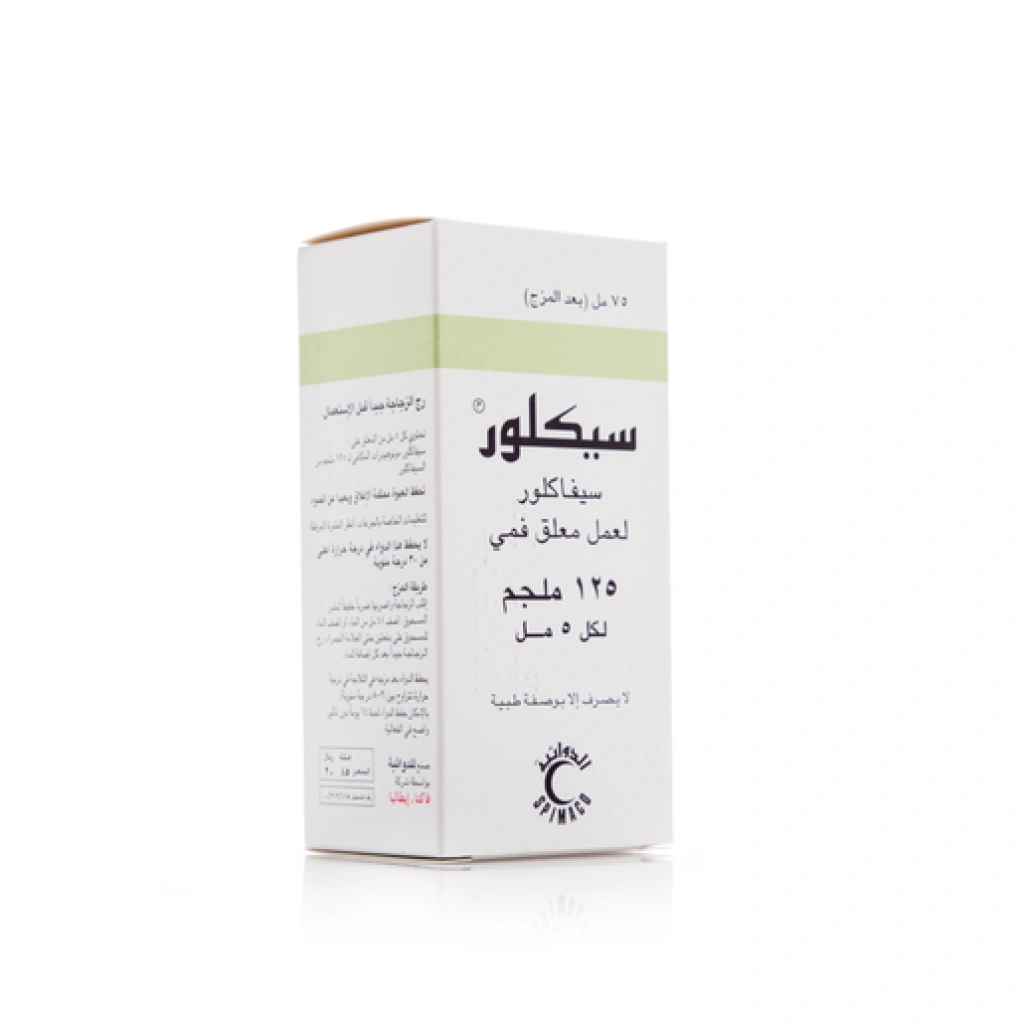
Product Description
Product Name
Ceclor 125 mg, Antibiotic, Suspension, Relieves Bacterial Infections - 75 ml
Scientific Name
Cefaclor 125 mg / 5 ml Suspension
Ceclor 125 mg Suspension Belongs To
Antibacterial Medicines
Mechanism of Action of Cefaclor
Cefaclor, like penicillin, is an antibiotic from the beta-lactam family. It works by binding to specific proteins (PBPs) located inside the bacterial cell wall that are necessary for cell wall synthesis, thereby inhibiting the formation of the bacterial cell wall.
Without a cell wall, the bacterial cell becomes vulnerable to external water and pressures, leading to rapid bacterial death.
Medical Uses of Ceclor 125 mg Suspension
Used to treat the following infections caused by bacteria such as:
Respiratory tract infections, including pneumonia, bronchitis, exacerbation of chronic bronchitis, pharyngitis, and tonsillitis.
As part of the treatment for sinusitis, otitis media, skin, and soft tissue infections.
Urinary tract infections, including pyelonephritis and cystitis.
How to Use Ceclor 125 mg Suspension
Cefaclor is taken orally.
Adults: The usual adult dose is 250 mg every eight hours. For severe infections, the specialist doctor may double the doses.
Children: The usual recommended daily dose for children is 20 mg/kg/day divided into doses every eight hours.
Doses may be changed in special circumstances, so always follow the instructions of your doctor or pharmacist.
If you take more of the medicine than you should, talk to a doctor or go to the hospital immediately.
If you forget to take a dose, take it as soon as you remember unless it is time for the next dose.
Do not take a double dose (two doses at the same time) to make up for a forgotten dose.
Side Effects of Ceclor 125 mg Suspension
Although the following side effects are not common for everyone, some patients may complain of:
Diarrhea
Nausea and vomiting
Increased eosinophils
Blood cell disorders
Vaginitis
Increased liver enzymes
Nephritis
Use of Ceclor 125 mg Suspension During Pregnancy and Breastfeeding
If you are pregnant or breastfeeding, think you may be pregnant, or are planning to have a baby, ask your doctor or pharmacist for advice before taking this medicine.
Your doctor will discuss the potential risks and benefits of using this medicine during pregnancy and breastfeeding.
Useful Tips to Strengthen Immunity
We must acknowledge that the body's immune system develops and strengthens as a result of upbringing and care throughout different stages of life, starting early. Ways to boost immunity include:
Proper nutrition: Eat balanced meals.
Eat immune-boosting foods such as antioxidants and probiotics. Also, some nutritional supplements like Sambion capsules, C-Ronz 1000, and Vitamin C with Zinc will be beneficial.
Stay physically active.
Get enough sleep.
Avoid/reduce stress.
Avoid smoking.
Stay up to date with vaccinations.
Follow all personal hygiene and infection prevention protocols, including frequent hand washing, practicing physical distancing, following all cooking hygiene procedures, and disinfecting your home (especially common surfaces) regularly.
Monitor your body temperature with a thermometer, for example, Microlife ear thermometer or Beurer oral thermometer.
Warnings and Precautions While Using Ceclor 125 mg Suspension
Talk to your doctor or pharmacist before taking the medicine if you have or have had any of the following conditions:
Kidney problems
Heart disease
Liver problems
Cefaclor should be administered with caution in the presence of marked impairment of renal function.
Prolonged use of Cefaclor may result in overgrowth of non-susceptible organisms during treatment.
Tell your doctor or pharmacist if you are taking, have recently taken, or might take any other medicines, including over-the-counter medicines, prescription medicines, herbal supplements, vitamins, and nutritional supplements.
How to Store Ceclor 125 mg Suspension
Store below 25°C.
Do not refrigerate the medicine.
Keep this medicine out of the sight and reach of children.
Store in the original package to protect it from moisture.
Do not use this medicine after the expiry date stated on the box/strip/label. The expiry date refers to the last day of that month.
Your Health in Numbers
The average oral temperature is 37°C.
Rectal temperature readings are approximately 0.3 to 0.6°C higher than oral readings.
Ear temperature readings are approximately 0.3 to 0.6°C higher.